StudyMap — Day 2: The AI Needed a Library. So We Built One.
Day 2: Standing up the Elastic RAG vault — ingesting 18 years of GCSE DT resources and proving semantic search actually works.
A Gemini Agent Without Context Is Just a Chatbot.
Day 1 ended with the Google Cloud Agent Builder configured and a working Gemini agent. It could hold a conversation. What it couldn’t do was answer a question about your curriculum, your students, or your specific GCSE DT scheme of work.
That’s the core problem with off-the-shelf AI in education: it’s trained on everything, which means it’s expert at nothing in particular. Ask it about sustainability in product design and you’ll get a competent, generic answer. You won’t get a response grounded in the AQA mark scheme, the BBC Bitesize resources your students actually use, or the specific terminology the examiner expects.
“The agent was smart. It just didn’t know anything about our school.”
The fix is RAG — Retrieval Augmented Generation. Before answering, the AI searches a curated knowledge vault, pulls the most relevant material, and grounds its response in that. Today’s job: build the vault.
Retrieval Augmented Generation. Instead of relying purely on training data, the model first searches a custom knowledge base — your documents, your resources — and uses what it finds to inform its answer. The result is specificity the base model can’t achieve on its own.
Elastic Serverless. No DevOps Required.
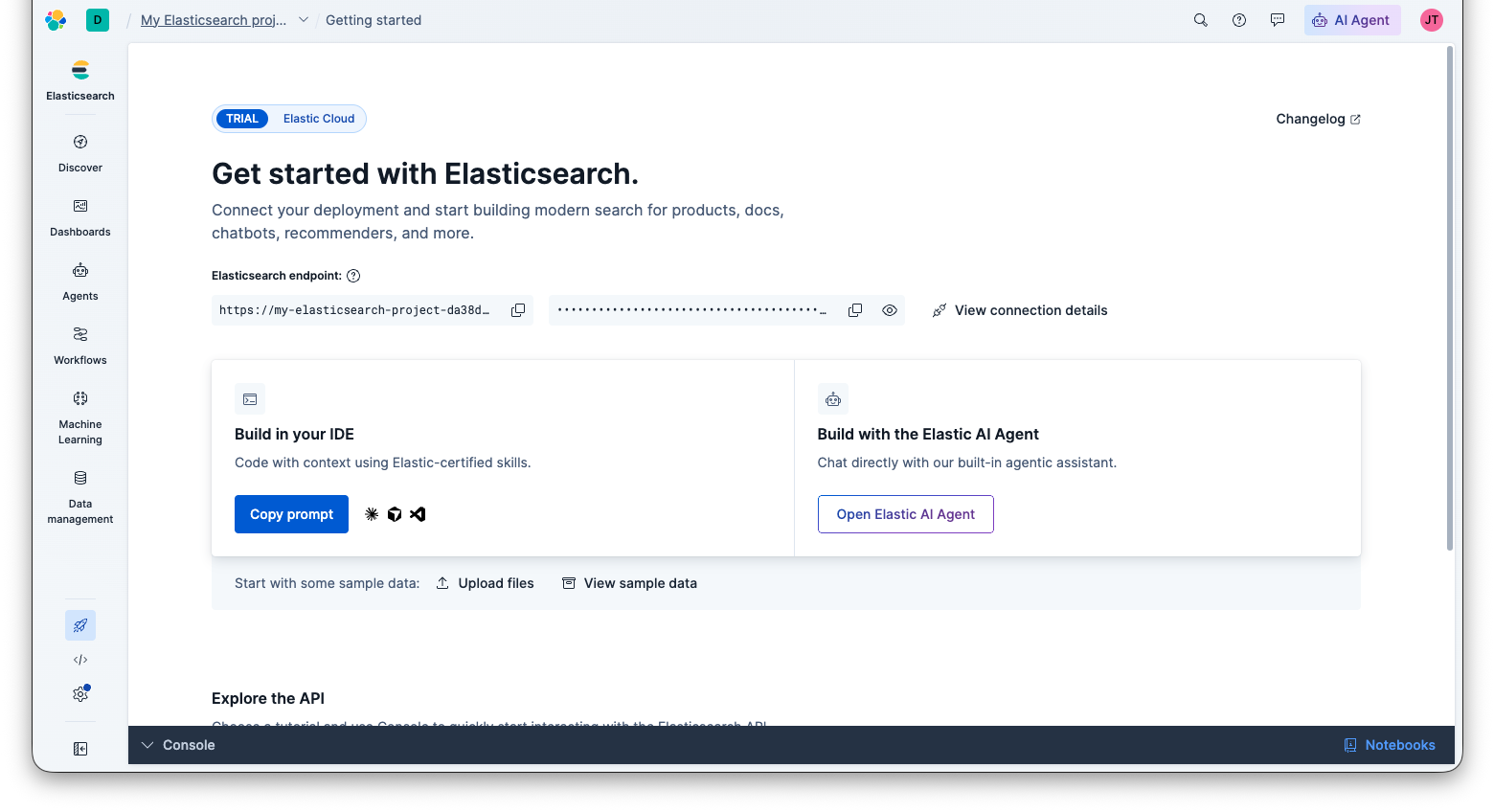
The knowledge vault runs on Elastic — specifically their serverless offering, which is part of the Google Cloud Next ’25 hackathon’s partner track. Serverless means no cluster management, no capacity planning, no infrastructure overhead. Spin it up, point data at it, it scales.
The instance was live within minutes. One index, one purpose: GCSE DT Sustainability.
18 Years of GCSE DT Resources. Curated, Not Dumped.
The temptation with RAG is to throw everything in and hope the model figures it out. That’s a mistake. Garbage in, garbage out — except it’s worse, because the model will confidently present the garbage as a credible answer.
Instead, the resource library was hand-curated: BBC Bitesize articles, AQA specification documents, past paper materials, and examiner reports — 18 years of content, filtered down to what’s actually relevant to sustainability in DT. The index was created in Elastic, the documents ingested and vectorised.
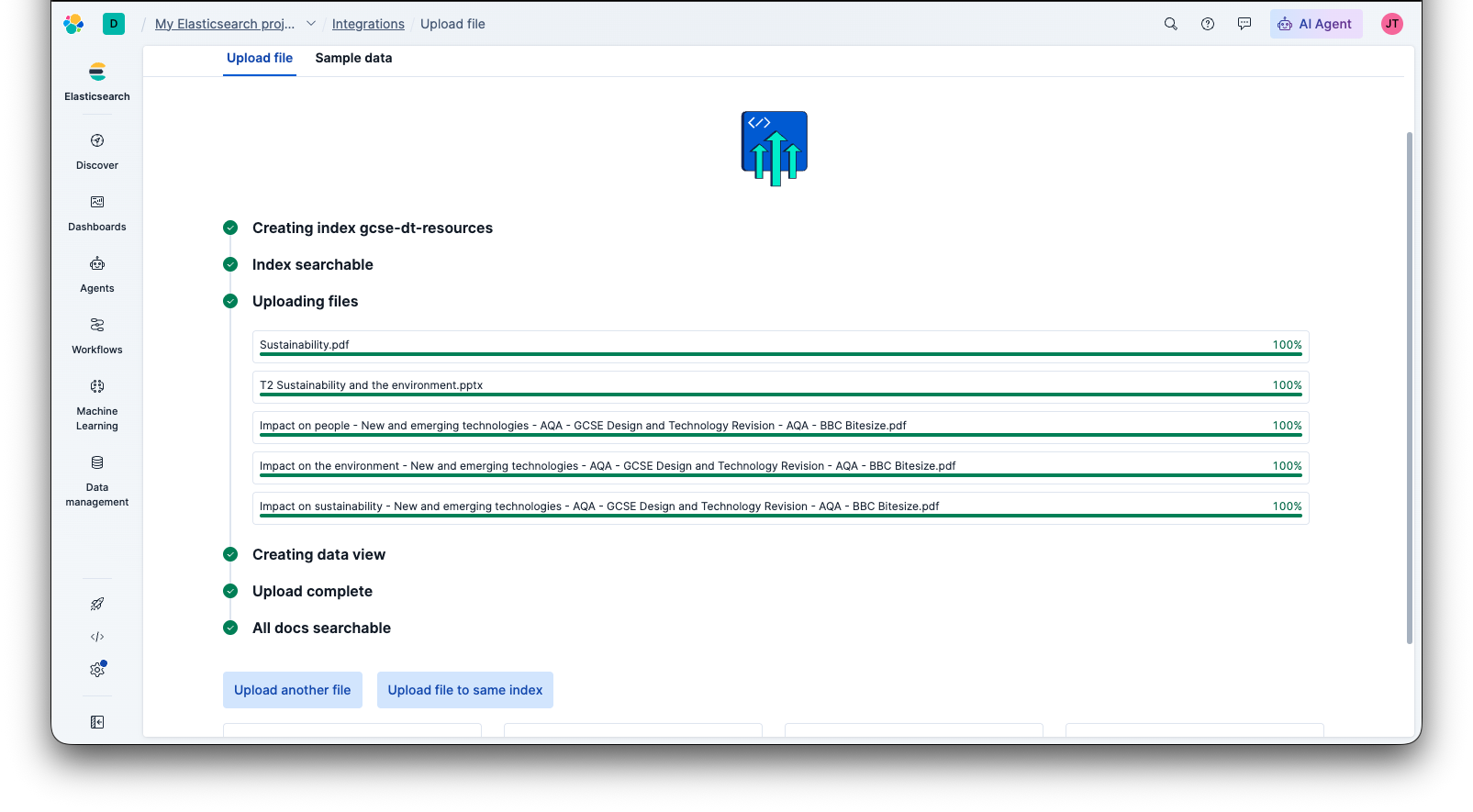
Vectorised search is only as good as what you put in. A smaller, high-quality corpus beats a large noisy one every time. The AI doesn’t know what’s authoritative — you do. That editorial judgment is part of the product.
The Microbeads Test. This Is Where It Gets Real.
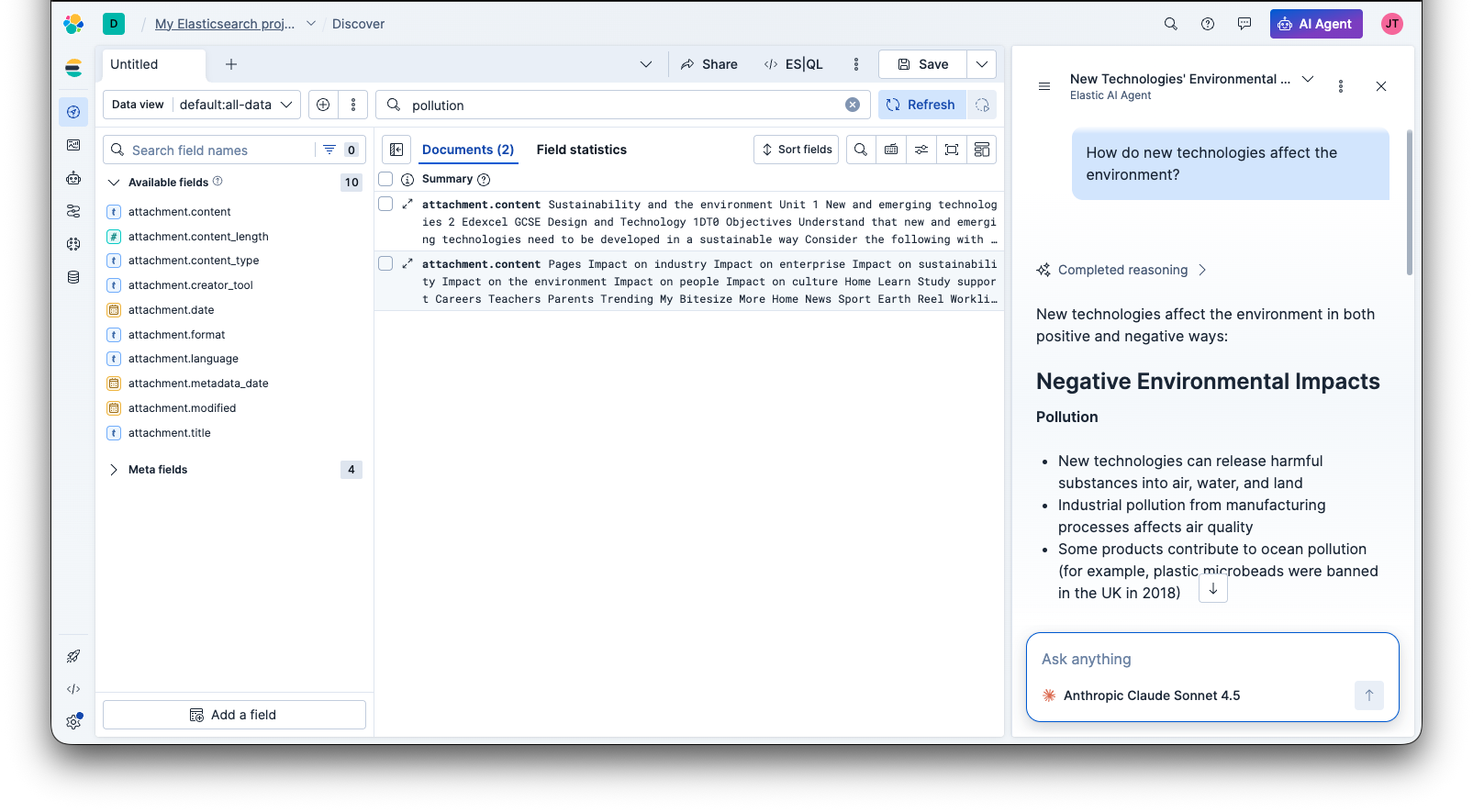
You can’t ship a RAG system without proving it actually retrieves the right thing. So we ran a test: asked the Elastic AI Assistant a question about the environmental impact of new technologies in product design. No keywords, no shortcuts — just a natural language question the way a student might ask it.
The system didn’t keyword-match “pollution.” It reasoned through the documents and surfaced a specific fact: plastic microbeads were banned in the UK in 2018 — pulled directly from the BBC Bitesize resources in the vault. The “Completed reasoning” tab showed the chain of thought before the answer was returned.
“It didn’t find a word. It found a fact. That’s the difference between search and understanding.”
This is the foundation the Gemini agent will query. Tomorrow: connecting the two. The MCP server that lets Gemini ask Elastic a question before it forms an answer.
- Elastic Serverless instance live
- GCSE DT Sustainability index created
- 18-year curated archive ingested and vectorised
- Semantic search proven — microbeads test passed
- MCP server: connecting Gemini to Elastic vault
- First integrated Gemini → Elastic query
- Student data analysis trigger logic
Building AI for your school?
We’re documenting every step. Follow the build or get in touch.